
Swimming pools are a great source of joy and relaxation, but they also require regular maintenance to ensure a safe and enjoyable experience for everyone. Pool cleaning is a vital aspect of pool maintenance, and it’s crucial to follow proper safety precautions and best practices during the process. During the peak summer season, pool companies las vegas experience a high demand for their services as residents and businesses seek professional maintenance to keep their pools in top-notch condition. In this comprehensive guide, we will explore the essential steps to ensure pool cleaning safety, protect your health, and maintain a pristine swimming environment. Let’s dive in!
Understanding the Importance of Pool Cleaning
Proper pool cleaning is not just about aesthetics; it’s a matter of health and safety. Swimming pools can be breeding grounds for bacteria, algae, and other harmful microorganisms if not cleaned regularly. These contaminants can lead to various waterborne illnesses, skin infections, and eye irritations. Moreover, neglected pools can become slippery and hazardous, increasing the risk of slips, trips, and falls.
Step-by-Step Guide to Safe Pool Cleaning
1. Gather the Right Equipment
Before starting the cleaning process, gather all the necessary equipment. This includes a pool skimmer, pool brush, pool vacuum, pool chemicals (chlorine, pH balancers), safety goggles, gloves, and appropriate cleaning attire. Having the right tools at hand will make the cleaning process more efficient and safe.
2. Secure the Pool Area
Safety should always be a top priority when dealing with pool maintenance. Ensure the pool area is cordoned off from unauthorized access, especially during cleaning sessions. Place warning signs and barriers to prevent accidents and inform everyone in the vicinity about the ongoing cleaning process.
3. Skim the Surface
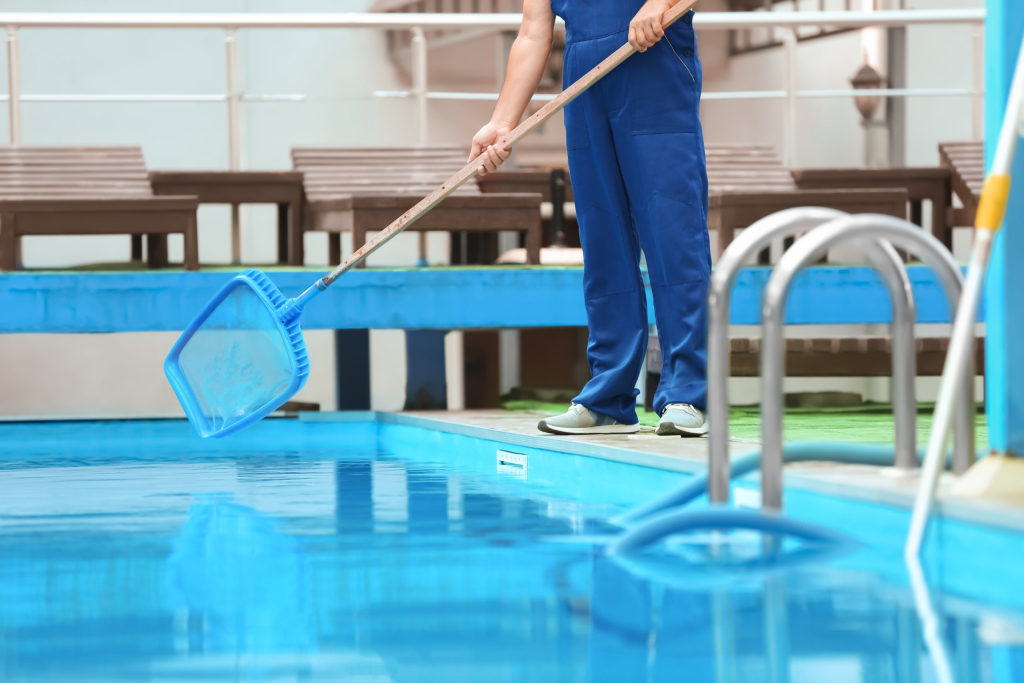
Start by skimming the pool’s surface using a pool skimmer to remove leaves, debris, and other floating particles. Skimming regularly prevents larger debris from sinking to the bottom and makes the cleaning process more manageable.
4. Brush the Pool Walls and Floor
Use a pool brush to scrub the pool walls and floor to dislodge algae and grime. Pay special attention to corners, steps, and other hard-to-reach areas where algae tend to accumulate. Regular brushing prevents the buildup of algae and ensures a clean swimming surface.
5. Vacuum the Pool
After brushing, it’s time to use a pool vacuum to remove the loosened debris from the pool floor. There are different types of pool vacuums available, including manual, automatic, and robotic options. Choose the one that best suits your needs and budget.
6. Check and Balance Chemical Levels
Proper chemical balance is crucial for maintaining a safe swimming environment. Test the pool water regularly using a pool testing kit and adjust chemical levels as needed. Properly balanced water helps prevent the growth of harmful bacteria and ensures the water remains clear and inviting.
7. Shock the Pool
Pool shocking involves adding a large dose of chlorine or other pool sanitizers to eliminate bacteria and organic contaminants. Shocking is typically done on a weekly or bi-weekly basis, but frequency may vary depending on pool usage and environmental factors.
8. Backwash the Filter
The pool filter plays a critical role in keeping the water clean and clear. Backwash the filter regularly to remove trapped debris and dirt, allowing the filter to function efficiently. A clean filter improves circulation and helps maintain water clarity.
Best Practices for Pool Cleaning Safety
1. Use Personal Protective Equipment (PPE)
Always wear appropriate PPE, such as safety goggles and gloves, to protect yourself from pool chemicals and potential irritants. Additionally, consider wearing closed-toe shoes to avoid slipping accidents.
2. Read Chemical Labels and Instructions
When handling pool chemicals, read and follow the manufacturer’s instructions carefully. Improper use of chemicals can lead to harmful reactions and health hazards.
3. Store Chemicals Safely
Store pool chemicals in a cool, dry, and well-ventilated area, away from direct sunlight and out of reach of children and pets. Never mix different pool chemicals as this can lead to dangerous chemical reactions.
4. Avoid Pool Cleaning During Pool Use
For safety reasons, avoid cleaning the pool while it is in use. Wait for the pool to be unoccupied before starting any maintenance tasks.
5. Learn CPR and First Aid
Having CPR and first aid knowledge can be a lifesaver in emergencies. Consider getting certified in these skills to ensure you can respond effectively to pool-related incidents.
6. Regular Maintenance Schedule
Create a regular pool maintenance schedule and stick to it. Consistent cleaning and water treatment will help prevent major issues and reduce the risk of waterborne illnesses.
Conclusion
Keeping your pool clean and safe is essential for providing a pleasant swimming experience for you, your family, and your guests. By following the precautions and best practices outlined in this guide, you can maintain a pristine pool environment and minimize the risk of accidents and health hazards.
Remember, pool cleaning is not just about routine chores; it’s a responsibility that impacts the well-being of everyone who uses the pool. Emphasize safety, stay consistent with maintenance, and enjoy your pool to the fullest!